
Decode Huron County Tax Records
Start with the Huron County FetchGIS parcel card. It displays assessment and tax-history clues for a parcel. The Treasurer and local treasurers handle distinct collection stages, so the leading fields must stay separate because each one answers a different question.
| Field | What It Shows | Where |
|---|---|---|
| MBOR Assessed | The local assessed column for the stated year | FetchGIS and assessor |
| Final SEV | The equalized assessed value | FetchGIS and Equalization |
| Final Taxable | The Proposal A tax base for the year | FetchGIS and assessor |
| Current bill | Season, charges, payment, and amount due | City or township treasurer |
| Delinquent status | County-stage arrears, notices, or foreclosure routing | County Treasurer |
Michigan assessed value generally runs 50 percent of true cash value. SEV is the equalized assessed value. Taxable value follows a different path. Proposal A caps its growth each year. Treat neither the bill nor SEV as the last sale price or a current appraisal.
Three Huron County Value Columns
Record three value columns. Take down MBOR Assessed, Final SEV, and Final Taxable with the same tax year and access date. Proposal A generally caps annual taxable-value growth at the lower of inflation or 5 percent, subject to additions and qualifying transfers. A qualifying transfer can uncap taxable value to SEV the following year.
A value jump alone does not prove a sale. Confirm any transfer through Huron County deed records. County equalization ratios near 50 percent test classes and local units in aggregate, not individual parcels. They do not set title or market price.
Huron County Equalization Reports
The Equalization Department report index lists annual reports covering 2019 through 2026. Each one is official. Expect municipal totals, property-class ratios, land values, and related county-wide context.
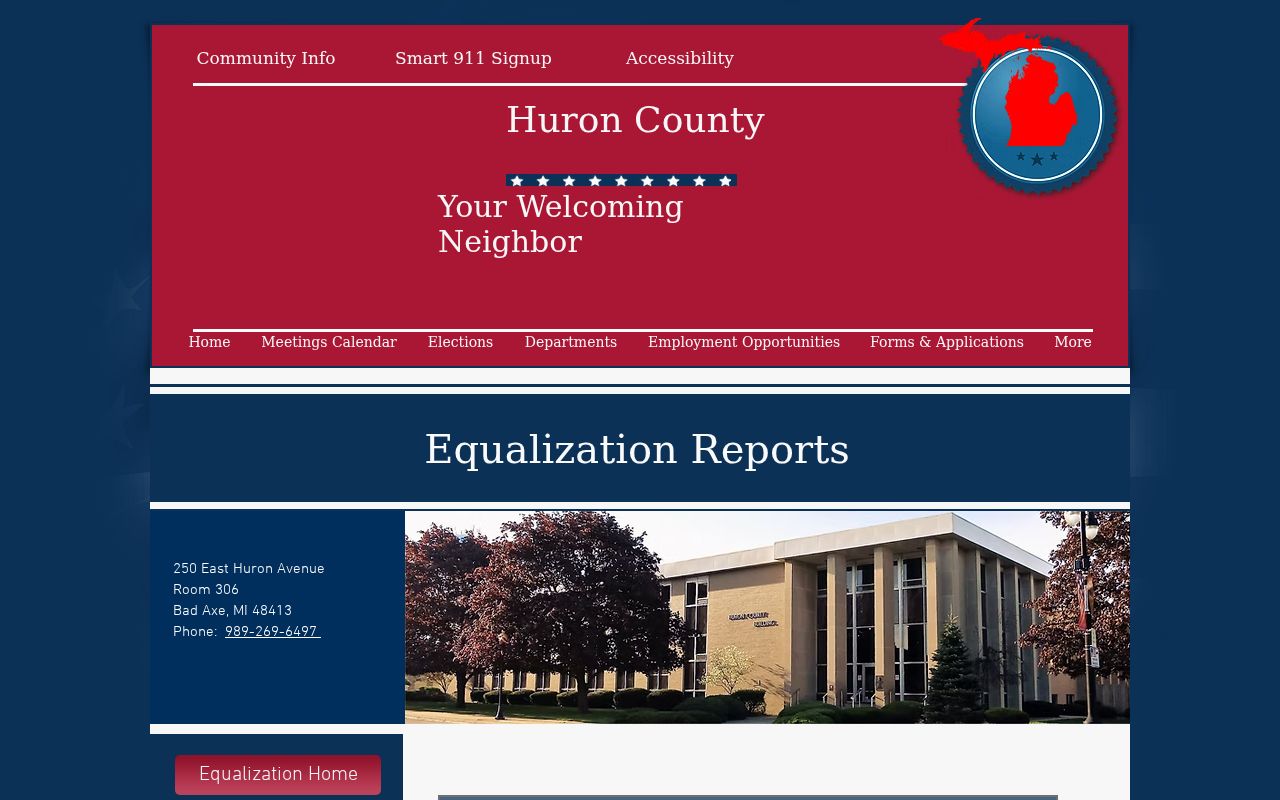
The report list supports year-over-year research. Still, an aggregate city or township figure never belongs to an individual parcel. Use the parcel's own assessment record for that work. To track a trend, copy the same real-property, personal-property, and taxable-value columns from each report. Copy the class-ratio columns too. A municipal change may reflect construction, reclassification, equalization, or a shifted parcel mix. Tie any parcel claim to that parcel's year-labeled assessment record.
Find a Huron County Tax Bill
A current tax bill belongs to the city or township. The Huron County Treasurer handles county functions. The Treasurer also handles delinquent-tax routing. Identify the parcel and its unit first. A ZIP or postal city is not enough to pick the collector.
- Find the PIN, unit name, and current tax year through the parcel search.
- Use the county's local treasurer list to reach the correct current collector.
- Read summer and winter year or season labels, charges, payments, and the settlement-date balance.
- Check the assessment roll for applied exemptions and compare the same year.
- Route delinquent years to the Huron County Treasurer.
- Assessed value
- The local estimate normally set at half of true cash value before equalization.
- Mill or levy
- A tax rate applied to taxable value; one mill equals one dollar per $1,000.
- Principal residence exemption
- Michigan relief from qualifying school operating taxes for an eligible principal residence.
- Tax lien
- A legal claim tied to unpaid taxes, distinct from a simple current balance.
Route Huron County Tax Status
The county Treasurer page links online payments, delinquent tax details, land sales, land bank offerings, foreclosure proceeds, and exemption materials. Credit and debit payments carry a published 3 percent convenience fee. An ACH route is also available.
Pick the right process for the stage. A current local-unit bill and the county delinquency file can show different stages, so record the year and the office responsible.
Track Huron County Delinquent Taxes
Michigan county foreclosure runs through a delinquent year, a forfeiture year, and a foreclosure year. A parcel-card flag is only a lead. Gather the statutory stage, notice date, and redemption deadline. Pull the auction result and any excess-proceeds information from the proper source.
The state foreclosure process page explains the milestones that apply to county workflows. FetchGIS expressly excludes unpaid personal-property taxes from its delinquent panel. That panel is not a complete business-tax search.
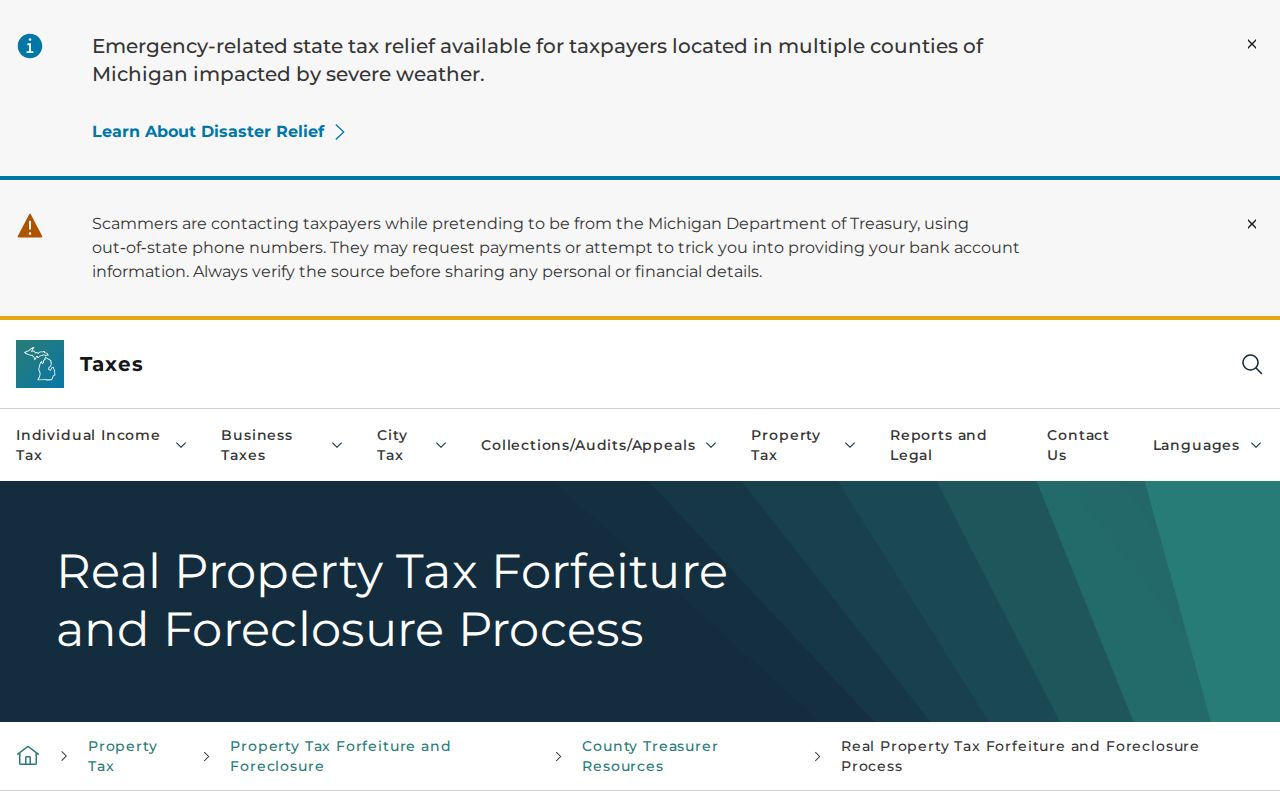
The timeline gives procedural context only. One delinquency indicator does not make a parcel foreclosed.
Reconcile Huron County Tax Years
Build a year-and-source table first. A sound tax history needs one row per period. Each row should carry the municipality or township, PIN, MBOR assessed value, Final SEV, and Final Taxable value, plus exemptions and bill status. Label every period clearly. Never set a prior assessment beside a current settlement balance without dating both. Collection splits by office. The local treasurer handles current bills, and the Huron County Treasurer takes delinquencies. A local bill and a county delinquency file can disagree without either being wrong, so ask what date each balance covers and which installment it includes.
FetchGIS has limits. Its Tax History panel and its "Total Due as of settlement date" figure leave unpaid personal-property taxes out of the delinquent view. Remember that gap for commercial or agricultural personal property. One parcel result cannot vouch for every tax obligation tied to a business. Taxable value moves for many reasons. After a qualifying transfer it may uncap to SEV the next year. Additions, exemptions, equalization, and corrections also shift figures, so confirm the deed date and the assessor's explanation before naming a cause. A jump alone proves no sale, error, or delinquency.
For payment review, keep three documents apart. The public screen, the receipt, and a written balance statement each capture a different moment. A screenshot is just an instant. The treasurer statement fixes the amount through its calculation date. The receipt proves which transaction was accepted. Splits and combinations need a second check. A new PIN may emerge, a new principal residence exemption claim may be required, and older taxes may stay indexed under a predecessor parcel.
Record the former PIN, successor PINs, deed or plat date, assessment year, and exemption filing. Search both parcel generations first. The bill may sit under a predecessor parcel. Physical changes can lag in FetchGIS until the April after Equalization, so a new deed and the map may describe different moments. Ask the local assessor which parcel carried the disputed assessment. Then ask the treasurer which PIN carried the bill. Seasons matter as well: keep summer and winter charges, levies, payment dates, and remaining balances separate, noting when any exemption claim or rescission took effect.
Separate Huron County Exemptions
The principal residence exemption and the poverty exemption run on separate tracks. Michigan Form 2368 claims the principal residence exemption. State guidance lists June 1 for the summer roll. It lists November 1 for the winter roll. They are not interchangeable. A new parcel number after a split or combination requires a fresh form. Rescission generally follows when ownership or occupancy ends.
The poverty exemption arises under MCL 211.7u. It uses an annual local application with supporting documents. Current state policy lets the Board of Review grant 100, 75, 50, or 25 percent relief. It does so through forms 5737, 5738, and 5739. Veteran and personal-property materials also appear through county routes but carry their own eligibility rules.
Contest a Huron County Assessment
Start with the current assessment notice. Then get the Board of Review schedule for your city or township. Dates and later appeal routes vary by property class and tax year. Never reuse an old calendar. Contact the local assessor first. Preserve the notice. Ask which form and appointment method apply.
Good evidence wins appeals. Bring the parcel card, property-class and land-value material, corrected building facts, and comparable sales. Add photographs. Add a clear statement of the value you want. The Equalization Department supplies county context. The local Board of Review decides first in the ordinary process.
Use the current notice. Confirm the filing deadline and hearing route with the local Board of Review before relying on a past-year date.
Preserve Huron County Tax Evidence
Every saved result needs full labels. Include the PIN, unit, tax year, field label, access date, and source. Keep rows separate. Assessment, payment, exemption, delinquency, and recorded transfer entries belong in different rows, so a later reader never mistakes a value for a bill or a bill for proof of title.
What if a recent deed and FetchGIS disagree? The county warns that physical parcel changes may wait until the following April after equalization. Check the local assessor for a newer administrative file. Retain both dates.
Compare like years. A sound Huron County property tax review never mixes a prior assessed column with a current balance.