
Read Huron County Deed Types
The Huron County Register of Deeds holds deeds, mortgages, liens, plats, easements, and other land instruments. A deed records a conveyance. Mortgages and easements do different work. The instrument type explains the transaction, while the parties, date, legal description, and recording reference establish the match.
| Deed Type | What It Does | Common Use |
|---|---|---|
| Warranty deed | Conveys the stated interest with covenants | Ordinary sale |
| Quitclaim deed | Conveys whatever interest the grantor has | Family or ownership cleanup |
| Representative deed | Shows a transfer made in a stated legal capacity | Trust or estate administration |
| Tax or foreclosure instrument | Documents a statutory transfer process | Distressed-property chain |
| Easement | Records a limited right affecting land | Access or utilities |
Transfer tax is not the sale price. State and county rates total $0.86 per $500 when no exemption applies. Read the instrument's consideration statement or valuation affidavit directly. Never convert a tax amount into a claimed purchase price. The land-record system files mortgages, assignments, discharges, construction liens, restrictions, and releases beside conveyances. These instruments shape a parcel's history without always changing its owner. Record each type as you find it. Then decide whether it transfers an interest. It may secure a debt, release an older filing, or place a condition on the land.
Huron County's 1947 Divide
The online land-record index covers 1947 to the present. Other county land records dating to 1848 remain available in the Register of Deeds office. These are two products: an online index lead and the underlying recorded instrument. A result screen is not automatically a certified copy.
At the cutoff, note the final grantor, grantee, legal description, and book/page or document reference. Contact Room 203 at 250 E Huron Ave, Bad Axe, or call 989-269-9941 for the older deed-book route. The office is open Monday through Friday, 8:30 a.m. to 4:30 p.m., including noon.
Enter Huron County Deed Portals
Huron County links Laredo and Tapestry for deed searches. Each portal opens on a login or interactive landing screen. Verify fields, images, and charges inside each portal. The official Laredo access screen displays the county's login entry for recorded documents.
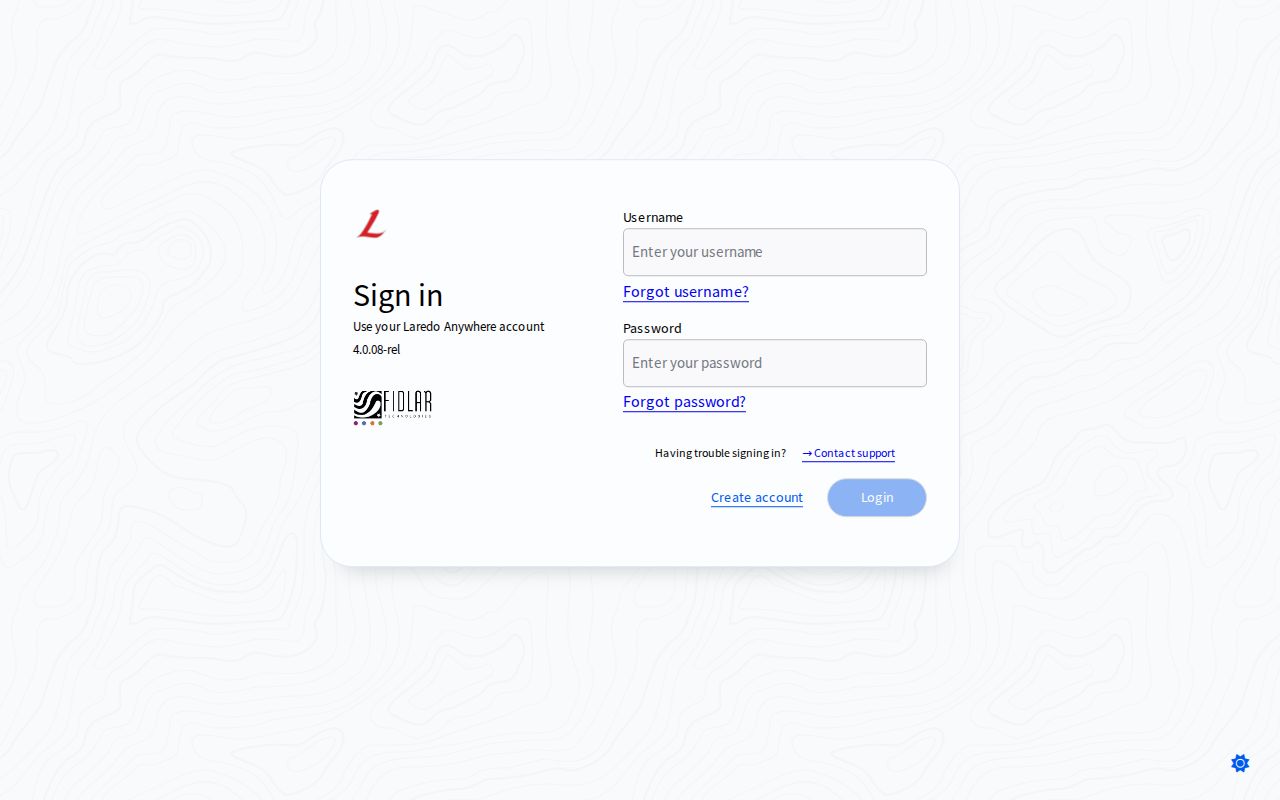
This confirms the official county-linked route; Tapestry is the other.
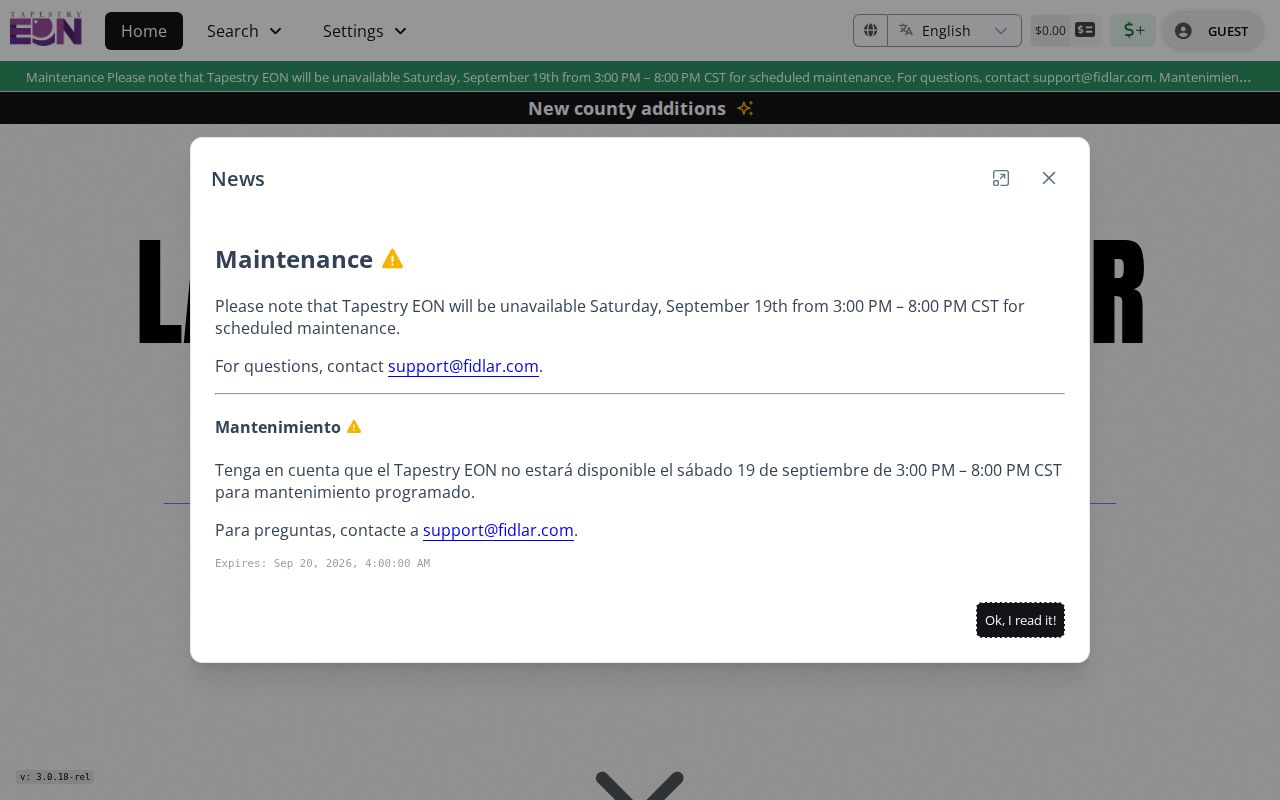
Save the names and recording reference shown, then verify copy options with the office.
Walk Huron County's Deed Chain
Start with the newest apparent owner on a dated parcel card. Find that party as grantee on the acquisition deed. Record the grantor and legal description. Then search that grantor as the next grantee, stepping backward; names navigate the index, but the land description ties the links together.
- Find the acquisition instrument and capture its recording date and reference.
- Read the prior owner as grantor, keeping the indexed spelling and capacity.
- Search that party as grantee and compare descriptions, acreage, lot and block, or section-town-range.
- Branch the chain for a split, estate, land contract, foreclosure, or correction.
- Carry the last verified clues into office deed books at the online cutoff.
- Grantor
- The party transferring the stated interest.
- Grantee
- The party receiving the stated interest.
- Chain of title
- The linked sequence of recorded transfers for the same land.
- Book/page or document number
- The recorder reference used to retrieve an instrument.
Rebuild Early Huron County Chains
Huron County's Sand Beach courthouse burned. Nearly all records inside were lost before the county seat moved to Bad Axe. A missing early index entry therefore proves nothing about whether a deed existed. The web index stops at 1947. Do not stop at the web index. The Library of Michigan Huron guide pairs well with Archives of Michigan materials. It also complements historic plats, probate transfers, newspapers, and historical society leads. Keep two findings separate. "Not found online" does not mean "not recorded." Historic maps can reveal an earlier road, township, owner, or plat clue. That helps when the modern PIN did not exist. The state guide points to an 1890 atlas, a 1930 plat book, and a 1955 map. Newspapers appear there too. Cite title, page, and year, then return to the Register for the instrument itself. A map label gives context, not title.
Check Huron County Recording Rules
Recording rules protect the record itself. The county requires original signatures and printed names, consistent notary names, grantee and drafter addresses, Michigan acknowledgment, legible black type, white paper, and the required first-page space and margins. Survivor filings may need proof of death. Court orders should be certified and sealed. Documents may be delivered or mailed with the correct fee; the office accepts check, money order, cash, and credit card. E-recording runs through Simplifile and CSC. These submission rules differ from searching an existing deed. A split or combination can create a new parcel number and break a name-only chain. Follow both legal descriptions and keep every branch separate. Easements, discharges, probate orders, and foreclosure instruments can affect a parcel without appearing as a simple owner-to-owner deed.
Monitor New Huron County Deeds
The Register links Property Fraud Alert. The service notifies a registrant when a matching name appears in a filing.
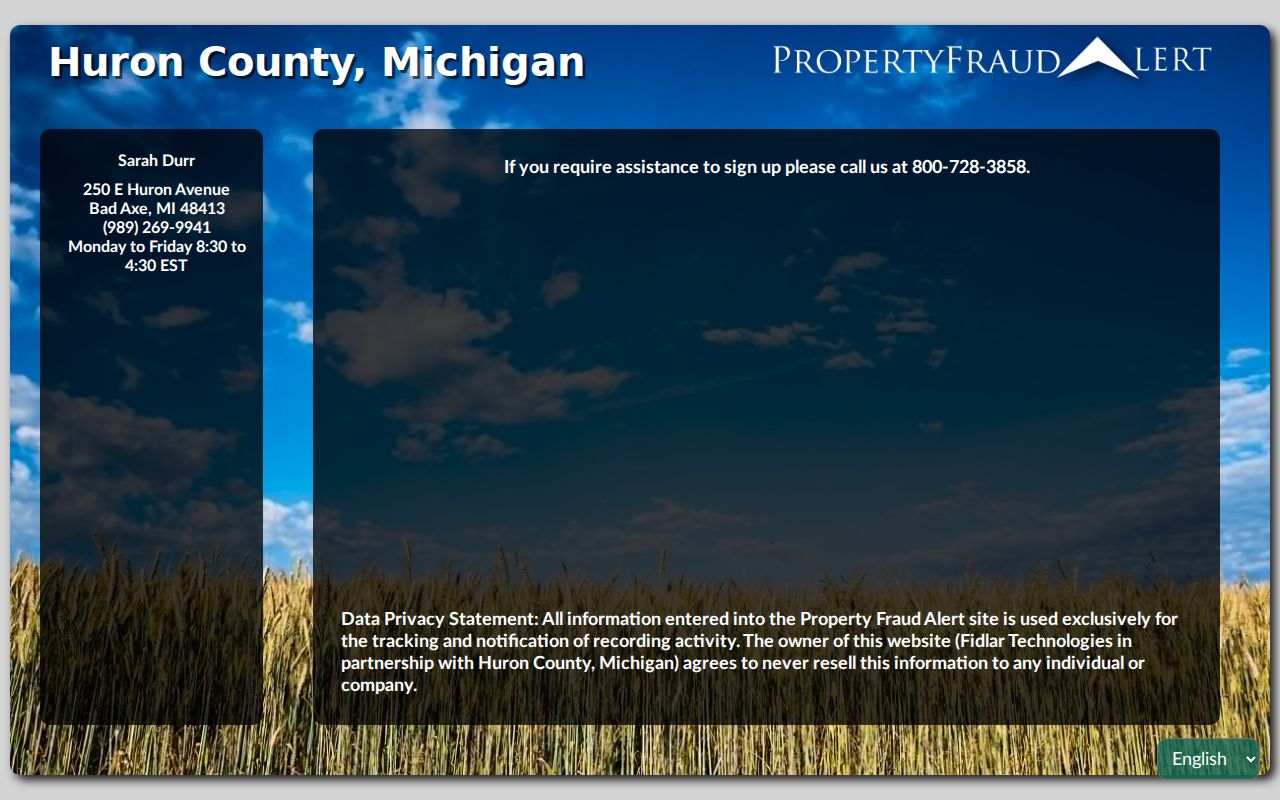
An alert is a monitoring tool. It is not a title opinion. Nor can it block a recording. Check any notice against the actual indexed instrument, and contact the Register if a filing looks unfamiliar.
Resolve Huron County Chain Branches
A Huron County deed chain rarely runs in a straight line. A parcel split can push part of a legal description onto a new parcel number. A combination can fold several descriptions into one. Land contracts, probate transfers, foreclosures, easements, and boundary corrections each open another branch. Give every instrument its own dated row. Quote the description that ties it to the land. Trust and entity names deserve equal care in Huron County property records. Keep the indexed spelling, punctuation, suffix, and signer capacity exactly as written. Search each documented variant on its own. Michigan's business registry can clarify a corporation or LLC. Probate files may explain a representative's authority. Neither source replaces the deed itself.
Treat FetchGIS sale data as a lead. Weigh its date and price against the recorded instrument. Decide only then whether a sale was arm's length for appraisal or tax roll purposes. Do not reverse-calculate a price from transfer-tax stamps, since an exemption, affidavit, multi-county deed, easement, or foreclosure rule may change the math. Flag any step the chain cannot confirm. Record the index, spelling, date range, and description you searched. Then work through the alternate portal, the office collection, recorded plats, probate files, and historic sources. That habit keeps "not found in this search" from hardening into a claim. No instrument exists anywhere in the deed records until the record proves it.
Request a Huron County Deed
Start with the index or a dated Huron County property search. Pull the party name, date, document reference, and description clues. Then ask the Register about the copy type. An online image, plain copy, or certified copy may suit the job. The public page posts no complete certified-copy fee schedule. So confirm the charge before you mail payment. Pre-1947 deed records call for a visit. Bring a tight date range and known land identifiers. Other administrative files may be requested under Michigan FOIA. Recorded instruments, though, keep their specialized recorder access process.
Recorded is not guaranteed. The index shows accepted filings. It does not resolve unrecorded interests or provide a title opinion.
A tight copy request pays off. Include every known indexed spelling and an approximate recording range. Add instrument type, parcel number, and fragments of the legal description. Ask for a fee estimate before requesting broad staff research. When the copy arrives, check its recording stamp, parties, and description against the index entry. Keep the portal access date and the copy date. An index entry, an image, and a certified copy are different forms of evidence in Huron County property records.
Trust and estate transfers need their own discipline. Retain the capacity beside each signer, such as trustee or personal representative. Compare any cited probate order. A foreclosure, land contract, boundary correction, or parcel split should get its own chain branch. Do not force it into a direct sale sequence. Every branch must return to the same land description or document how that description changed.
The county's online coverage date is a search boundary. It is not the start of land ownership. When the last online deed cites an earlier book, plat, easement, or restriction, follow that reference through the recorder's office collection. That matters most when a modern deed records incorporates older terms. It matters less when the deed repeats them in full.